
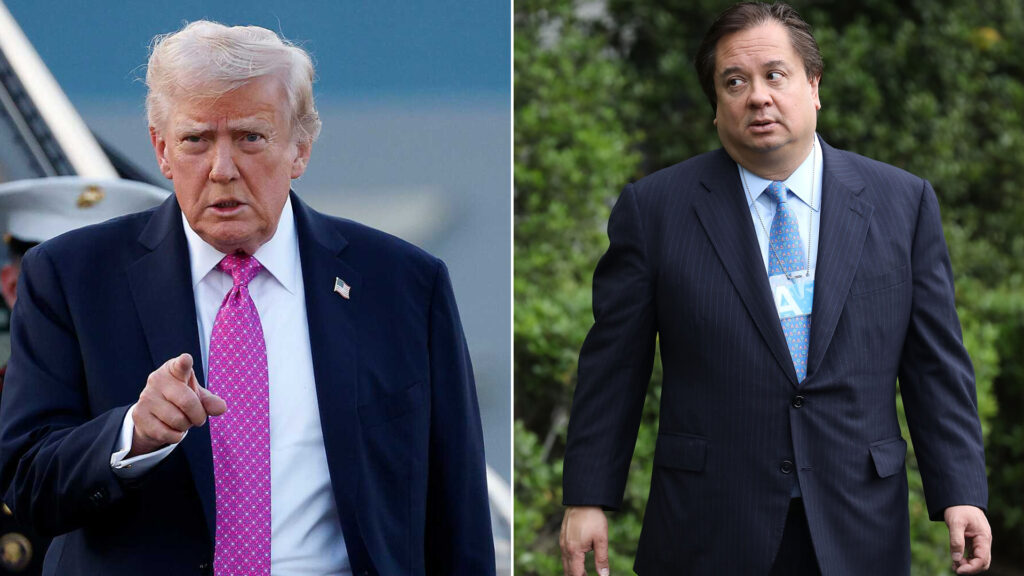
A statement attributed to George Conway is drawing significant attention online, reigniting debates around impeachment, accountability, and the limits of executive power in the United States.
The message, which has been widely shared across social media platforms, calls for impeachment and removal, warning about what is described as a potential abuse of power. While the statement itself is brief, the reaction to it has been anything but.
At the center of the discussion is a familiar constitutional mechanism: impeachment.
In the U.S. system, impeachment is designed as a safeguard—a process that allows lawmakers to hold leaders accountable if they are believed to have engaged in serious misconduct. It is not used frequently, but when it is, it signals a moment of intense political and legal scrutiny.
Conway’s statement appears to lean heavily on this principle.
By emphasizing concerns about “abuse of power,” the message points to one of the most commonly cited grounds in past impeachment discussions. The idea is straightforward: when authority is used in ways that go beyond legal or ethical limits, there must be a system in place to respond.
Supporters of this view argue that impeachment is not about politics—it’s about protecting the structure of government itself. They see it as a necessary tool to ensure that no individual, regardless of position, is above the law.
From their perspective, statements like Conway’s are part of a broader effort to keep those safeguards active and visible.
However, not everyone agrees.
Critics often argue that calls for impeachment can become overly politicized, especially in highly charged environments. They suggest that such statements may reflect broader political disagreements rather than clear legal violations.
This divide is not new.
In recent years, impeachment has become one of the most debated and polarizing topics in American politics. Each time it is mentioned, it tends to trigger strong reactions from both sides—some viewing it as a defense of democracy, others as a misuse of a serious constitutional process.
Conway’s statement fits directly into that landscape.
Its viral spread highlights how quickly political commentary can gain momentum, especially when it touches on issues as fundamental as power and accountability. In today’s digital environment, a single statement can move from a limited audience to a nationwide conversation within hours.
That speed has its own consequences.
As more people engage with the message, interpretations begin to vary. Some focus on the legal implications, discussing what constitutes an abuse of power and whether the situation meets that threshold. Others respond more broadly, viewing the statement as part of an ongoing political narrative.
The result is a layered conversation.
On one level, it’s about constitutional law—how impeachment works, when it should be used, and what standards apply. On another level, it’s about public perception—how people interpret leadership, trust, and responsibility.
And those two levels don’t always align.
For legal experts, impeachment is a structured process with defined steps and requirements. It involves investigations, evidence, and ultimately decisions made by elected representatives. For the general public, however, it often feels more immediate and emotional, shaped by headlines, statements, and personal beliefs.
That gap between process and perception is where much of the tension exists.
Conway, as a public figure with legal expertise and a history of political commentary, brings a particular weight to the conversation. His statements are often seen as more than casual opinions—they are interpreted as informed perspectives, even by those who disagree with him.
This adds another layer to the reaction.
Some see his warning as a serious call to examine leadership actions more closely. Others view it as part of a broader pattern of criticism that has been ongoing for years.
Either way, the impact is clear.
The conversation is not staying confined to legal circles. It is spreading across social media, news platforms, and public discussions, becoming part of a larger narrative about governance in the United States.
At the same time, the lack of a single, universally accepted interpretation keeps the debate active.
There is no consensus—only competing viewpoints.
Some people emphasize the importance of acting quickly when concerns arise, arguing that delays can weaken accountability. Others caution against rushing to conclusions, stressing the need for clear evidence and careful evaluation before invoking something as serious as impeachment.
Both perspectives reflect different priorities.
One focuses on urgency and protection.
The other on caution and due process.
As the discussion continues, it highlights a recurring theme in American politics: the balance between power and responsibility.
Impeachment exists as a mechanism to maintain that balance. But the decision to use it is never simple, and it rarely occurs without controversy.
Conway’s statement has, once again, brought that reality into focus.
It serves as a reminder that debates over leadership and accountability are ongoing—and that the tools designed to address them remain as relevant as ever.
Whether people see his message as justified or excessive, it has succeeded in doing one thing: sparking a conversation that reaches far beyond a single statement.
And in today’s environment, that conversation is likely to continue.