
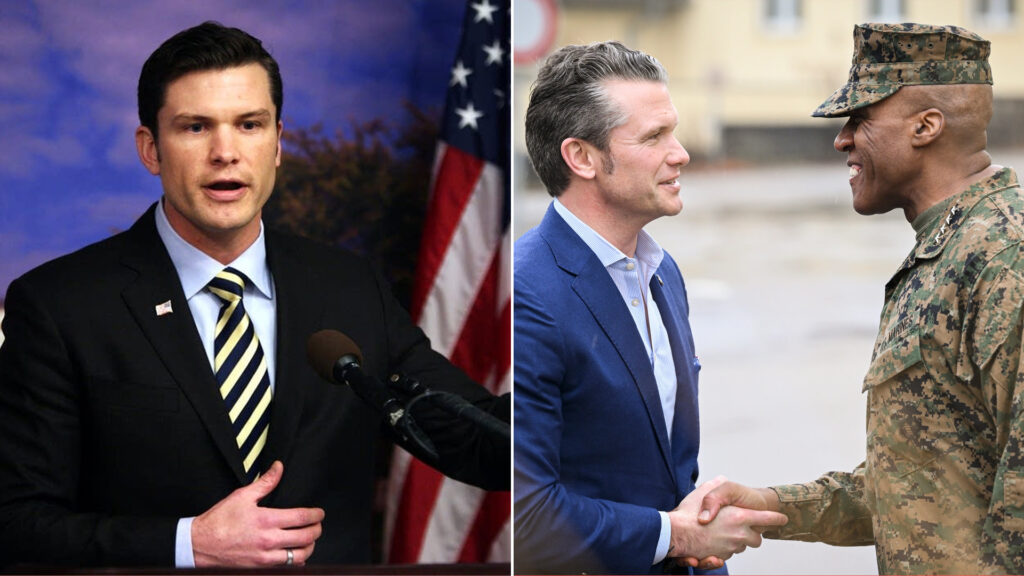
A new controversy is gaining traction online after reports claimed that American troops were served a $20 million meal featuring steak and lobster, with Pete Hegseth being linked to the decision. The claim has sparked strong reactions across political lines, quickly turning into a heated debate about government spending, military support, and public priorities.
At the center of the discussion is a simple but powerful question: what does it really mean to support the troops?
Supporters of the move argue that providing high-quality meals to service members is a meaningful way to show appreciation. For them, the cost is secondary to the message. They believe that the men and women serving in the military deserve more than just basic provisions, especially given the risks and sacrifices involved in their roles.
Many of these voices have taken to social media to defend the idea, framing it as a matter of respect rather than excess. Some have even pointed out that, in the context of large federal budgets, $20 million represents a relatively small amount—especially when directed toward those in uniform.
One widely shared sentiment captures this perspective clearly: if even a tiny portion of taxpayer money goes toward giving troops a better experience, then it’s worth it.
However, critics see the situation very differently.
Some Democratic voices have expressed frustration over what they view as unnecessary spending. They argue that while supporting the military is important, funds should be used more responsibly and directed toward long-term needs such as training, equipment, healthcare, and housing for service members.
For these critics, the issue isn’t about denying troops a good meal—it’s about priorities. They question whether expensive, one-time gestures are the best use of taxpayer money, especially when there are ongoing challenges within the military system that require consistent funding.
This divide reflects a broader pattern in political debates, where even actions intended as supportive can quickly become controversial depending on how they are interpreted.
Adding to the complexity is the role of Pete Hegseth, a media personality and vocal advocate for military issues. While his supporters praise him for standing up for service members and promoting stronger recognition of their contributions, others question the accuracy of the claims and the framing of the situation.
As the story spreads, another layer of discussion has started to emerge—whether the reported details are entirely accurate. Some observers have raised doubts about the $20 million figure and the scale of the meal itself, suggesting that viral headlines may be exaggerating or oversimplifying the situation.
This has become increasingly common in today’s media environment, where bold claims can travel quickly, often outpacing verification. As a result, conversations can escalate before all the facts are fully clear.
Still, regardless of the exact details, the reaction highlights something important about public sentiment.
There is strong, widespread support for the military across the United States. At the same time, there is also growing scrutiny over how government money is spent. When these two ideas intersect, debates like this are almost inevitable.
For many Americans, the idea of treating troops to something special feels justified. It aligns with a broader cultural emphasis on honoring those who serve. Gestures like upgraded meals, improved living conditions, or additional benefits are often seen as tangible ways to express that appreciation.
On the other hand, concerns about spending are also deeply rooted. Taxpayers expect accountability, and large figures—like $20 million—naturally draw attention. Even when the intention behind the spending is positive, questions about efficiency and necessity remain.
This tension doesn’t have an easy resolution.
It depends on perspective. Some people prioritize symbolic gestures and morale, while others focus on long-term investment and fiscal responsibility. Both sides claim to support the troops—the difference lies in how they believe that support should be shown.
As the debate continues, it’s clear that this issue goes beyond a single meal or a single decision. It reflects broader questions about values, priorities, and trust in how decisions are made.
For now, there has been no universally accepted clarification on the details of the report, which means the conversation is likely to continue evolving. What started as a viral claim has now turned into a larger discussion about how a nation chooses to recognize and support its military.
And in today’s environment, that kind of discussion rarely stays quiet for long.
Whether seen as a well-deserved reward or an unnecessary expense, the story has succeeded in doing one thing—bringing attention back to the ongoing conversation about what support for troops should actually look like in practice.
Because in the end, it’s not just about steak and lobster.
It’s about what people believe those in uniform truly deserve—and how far a country should go to provide it.